
When Germans Do Stripes
How A. Lange & Söhne forged its own movement aesthetic, one stripe at a time

Welcome back to The Deadbeat Seconds.
This week, we’re taking a closer look at finishing at A. Lange & Söhne- what defines it, how it differs from Swiss haute horlogerie, and why it continues to resonate with serious collectors.
A quick thank you to all subscribers, and a warm welcome to the newest paid members. It’s been especially fun seeing everyone’s new incomings this week: a Boutique edition Rattrapante, a limited edition Cellini-dial 1815 Up/Down, and even a Lange 1 “Stealth.” Keep them coming.
As always, if you’re a paid subscriber, I’m happy to offer a second opinion on potential purchases. A few close calls have been avoided recently—and I’d rather see a photo now than hear regrets later.
Let’s get into it.
There is a moment every Lange collector eventually arrives at. You flip over a Lange 1, or perhaps a Datograph and you expect to find something familiar. Geneva stripes, beveled edges, perlage. The usual hallmarks of high-end Swiss watchmaking. And you do find them- sort of. But something feels different. Less ornamental. More industrial. More honest.
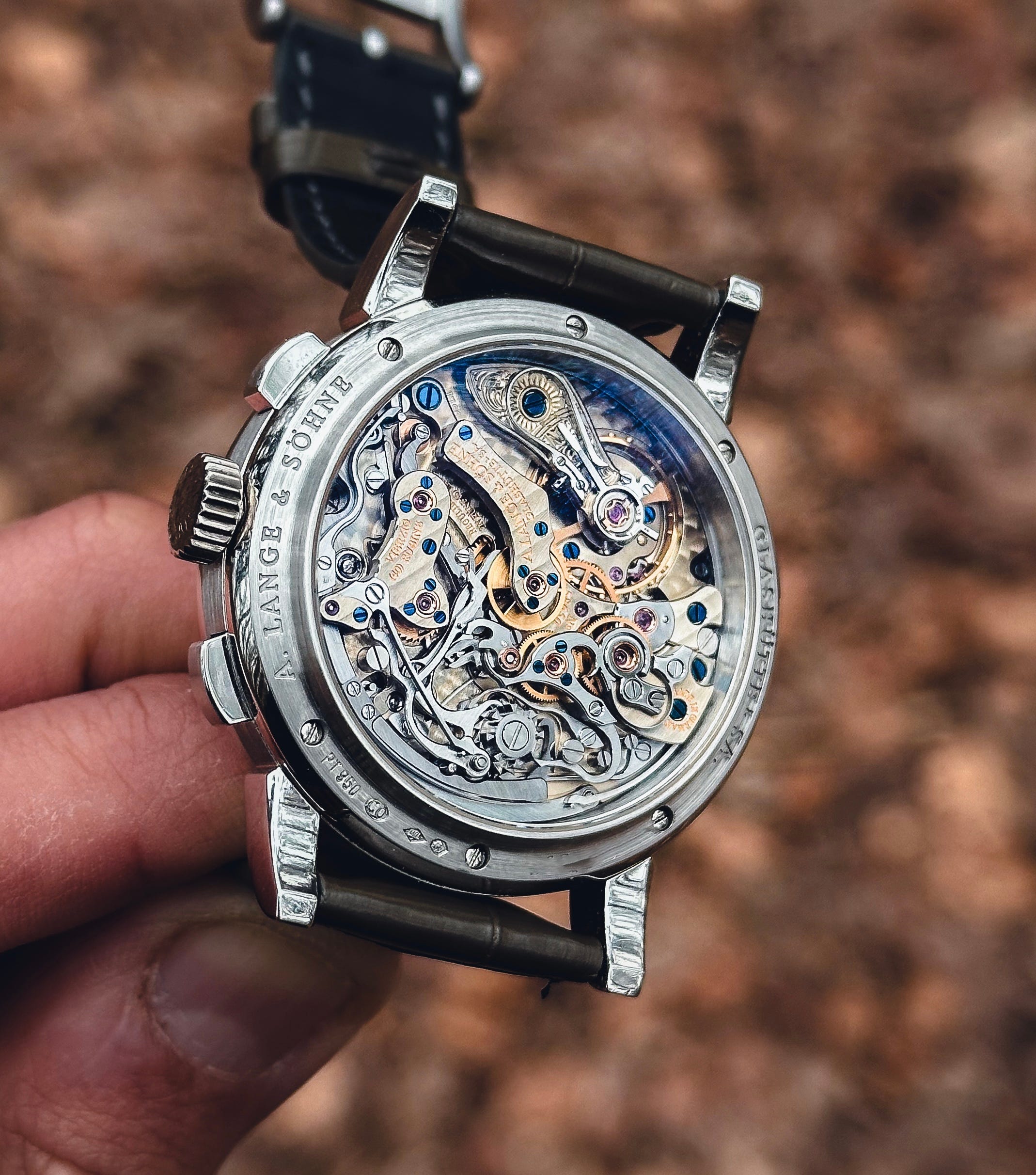
That moment, subtle as it may be, is the gateway to understanding how A. Lange & Söhne redefined the visual language of finishing. This is not simply about surface decoration. It is about philosophy, about cultural contrast, and about a deliberate assertion of independence. Lange movements are finished to the same exalted standards as the best of Switzerland, but they speak in a different dialect. And for serious collectors, learning to listen to that dialect is essential.
This article is about what makes Lange’s finishing unique- not just in terms of aesthetics or technique, but in how it reflects a specifically German approach to watchmaking. We will trace its evolution from the early post-revival years through to modern examples, explore the symbolic role of the three-quarter plate, and confront a more controversial question: is Lange finishing today better than it was in 1995?
The Swiss Template: What Finishing Meant Before Lange
To appreciate how Lange changed the conversation, we need to briefly define the terms of that conversation.
Traditional Swiss haute horlogerie finishing is, at its core, an exercise in consistency and flourish. Côtes de Genève (Geneva stripes), anglage, black polish, circular graining. These were all codified by maisons like Patek Philippe, Vacheron Constantin, and Audemars Piguet, particularly through the post-war decades and into the quartz crisis era. The idea was simple. The decoration of the movement was a visual assurance of quality and attention to detail. It had to be beautiful, but above all it had to be clean.
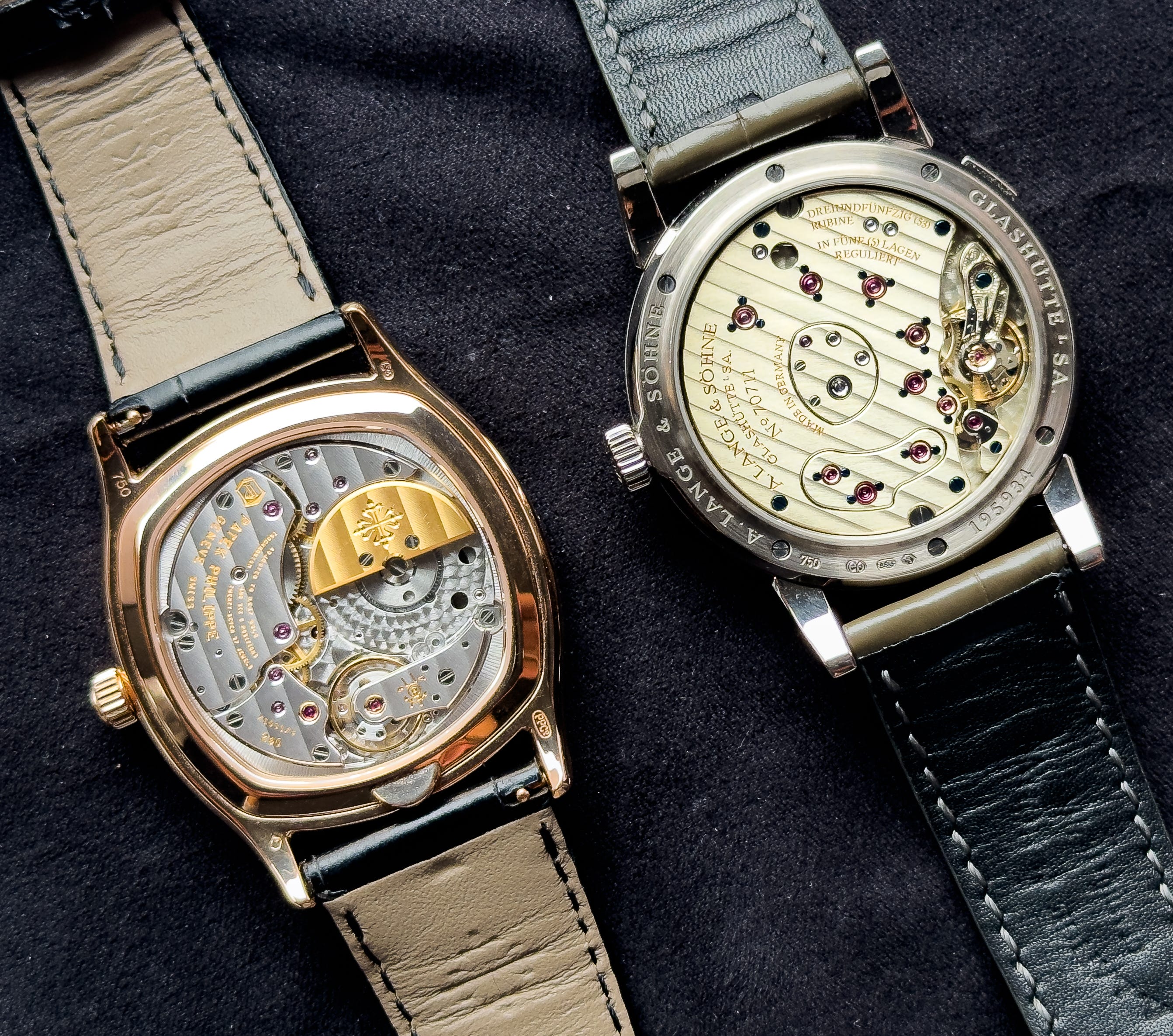
There is a kind of aloofness in classic Geneva finishing. It is elegant, balanced, and often feels detached from the realities of the machine. Bridges are shaped to be symmetrical and inviting to polish. Screws can be blued, but never too blue. If Lange is the cathedral of German watchmaking, then Swiss finishing is the ballroom.
So when the first Lange 1 was shown in 1994 with its German silver plates and bold screw-mounted, gold chatons, it was not simply reviving Glashütte watchmaking- it was rejecting the Swiss visual code.
What Makes Lange Finishing "German"?
Let’s start with the obvious. Lange movements are not rhodium-plated brass like most Swiss calibres. They are made from untreated German silver (a copper, zinc, and nickel alloy), which develops a warm champagne hue over time and is notoriously difficult to work with. That alone sets the tone. Let’s dive a bit deeper into German silver.
German Silver: The Silent Foundation of Lange Watchmaking
At first glance, most people notice the visual cues of a Lange movement: the striped plates, the gold chatons, the engraved balance cock. But underpinning all of that is something quieter, something that doesn’t call attention to itself- the material. Unlike most high-end Swiss watches, which rely on rhodium-plated brass, Lange constructs its movement plates, bridges, and cocks from untreated German silver. It is more than a metallurgical choice. It is a philosophical one.
What is German silver?
Despite the name, it contains no silver. German silver is an alloy of copper, zinc, and nickel. First developed for industrial use in Saxony in the early 19th century, it was originally designed as a non-toxic, affordable substitute for sterling silver. In 1823, Saxon chemist Ernst August Geitner succeeded in reproducing the Chinese alloy “packfong” and gave Europe its own version: a bright, hard-wearing metal with a distinctive, warm silvery tone. It was called argentan or alpacca in some regions, but the term “German silver” eventually stuck.
Why did Ferdinand Adolph Lange adopt it?
In the 1850s, Ferdinand Adolph Lange began using German silver in select pocket watches. Prior to that, movement frames were typically made of brass, occasionally gold-plated. German silver, though more difficult to work, offered several advantages. It was harder, more resistant to corrosion, and developed only a light, elegant patina over time. It did not need to be gilded and, crucially, it offered visual clarity to the movement’s architecture.
There may have also been a practical reason. Many early Lange pocket watches were exported to the United States without cases. At the time, tariffs on precious metals like gold were prohibitively high, and gold-plated brass was often mistaken for solid gold. German silver presented an alternative: attractive, durable, and tariff-friendly.
What makes it special today?
Since Lange’s rebirth in 1990, every movement developed in-house has been built around a German silver frame. The three-quarter plate- first introduced by Lange in 1864- remains the defining architectural element, and it too is crafted from this alloy. The plate, along with the base plate, balance cock, and escape-wheel cock, forms a rigid and resilient backbone for the movement. These parts are not directly involved in timekeeping, but their precision and stability are critical to the watch’s overall performance.
German silver is ideal for high-end hand-finishing. Its hardness allows for crisp anglage and graining. Its stability enables thin tolerances, which matter when building high-complication calibres. And its surface develops a mellow, golden hue over time, a living contrast to the bright polish of steel levers, ruby-red jewels, and heat-blued screws.
Why is it so rarely used?
Very few modern manufacturers use German silver. It is more expensive than brass. It is harder to polish. It tarnishes with fingerprints, which is why Lange watchmakers wear protective cots when handling it. And unlike rhodium plating, it offers no “do-over” if finishing goes wrong. But these challenges are part of what make the material so expressive. The result is tactile, warm, and unmistakably Lange.
Twofold assembly and Lange’s finishing standard
One of the most remarkable things about Lange’s use of German silver is the commitment to doing things the hard way. Each movement undergoes a twofold assembly process. After the first build, the movement is fully disassembled, cleaned, and reassembled again to ensure flawless alignment and finishing. The three-quarter plate is notoriously tricky to align due to the number of wheels it covers. Even experienced watchmakers must install and remove it multiple times to ensure perfect endshake.
But the payoff is immense. Through the sapphire caseback, the German silver surfaces provide a matte yet reflective canvas for the rest of the movement: black-polished steel, red rubies, gold chatons, and engraved details all appear in sharper relief against the soft, golden tones of the plates.
More than material: a statement of intent
In the words of Tino Bobe, Director of Manufacture at A. Lange & Söhne, “German silver is part of all our manufacture calibres, amounting to more than 70 that have been developed and built since the re-establishment. Its consistent usage is typical of the Lange way. It underscores our commitment to never take the easiest path, but always the one that leads us to the best result.”
For Lange, German silver is not just a medium. It is a message. It says: this movement was built to last. It was meant to be finished by hand. It was not designed around shortcuts or concessions. In a world where many luxury watches are increasingly about surfaces and shine, German silver reminds us that true substance often lies just beneath.
But it goes further.
1. The Three-Quarter Plate
The Invention of the Three-Quarter Plate
When Ferdinand Adolph Lange founded his manufacture on 7 December 1845, he brought with him not just ambition but a clear sense of purpose. He wanted to improve how watches were built—specifically, how they were assembled. One feature of the pocket watch movements of his time struck him as especially inefficient: the use of multiple separate bridges and cocks to hold the gear train in place.
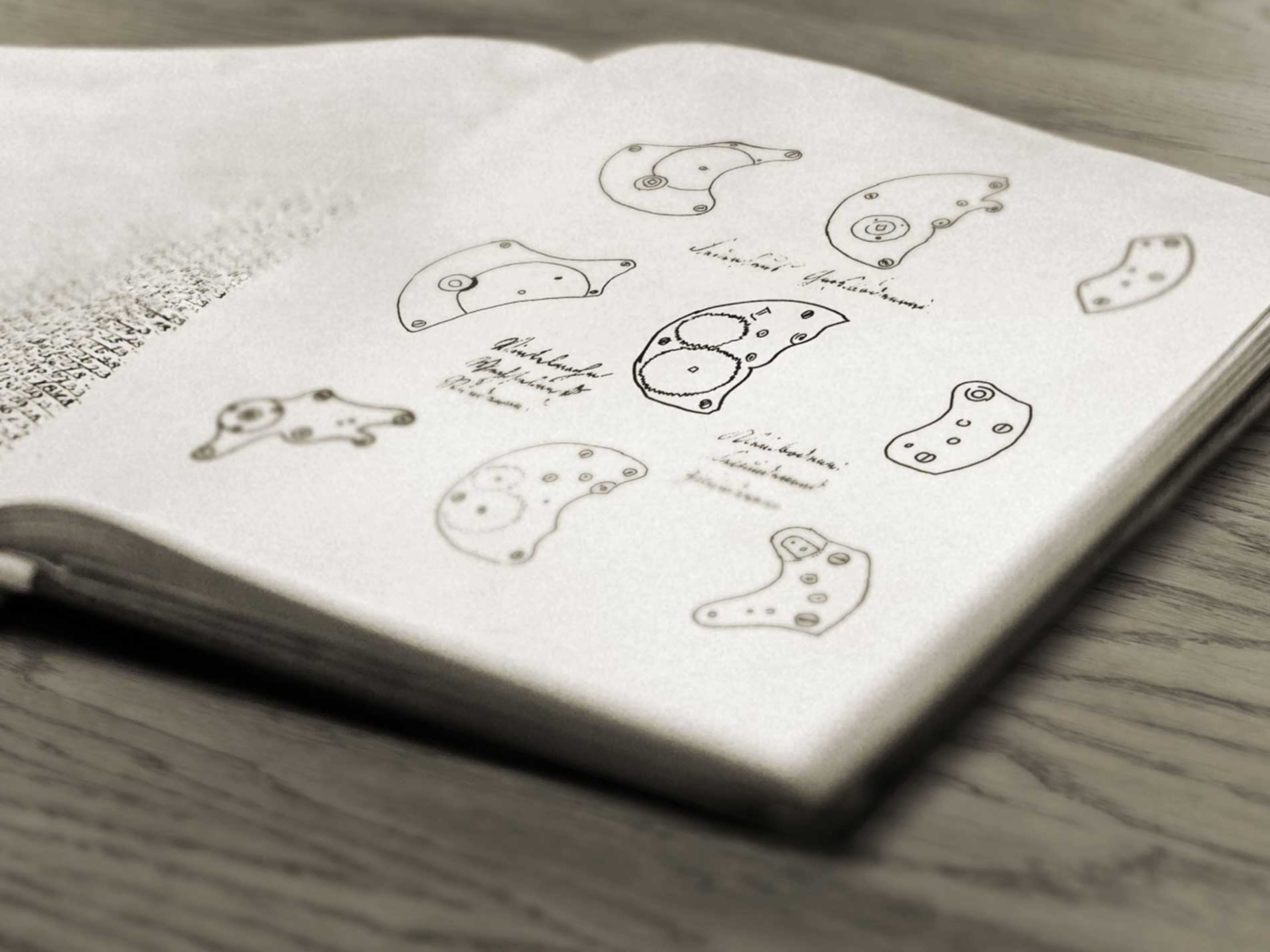
In these traditional constructions, each pivot sat beneath its own component. During assembly, the watchmaker had to align the wheels individually by trial and error. Adjusting one cock meant rechecking all the others, a laborious and error-prone process. Worse, cocks could shift over time, requiring periodic realignment. To a precision-minded watchmaker like Lange, this was unacceptable.
Determined to build timepieces that were not only accurate but reliably manufacturable, Lange set out to solve the problem. His answer was deceptively simple: create a single upper plate that held all the pivots of the key wheels in fixed positions. This unified structure brought greater stability, eliminated alignment drift, and significantly sped up assembly. The trade-off? The process of fitting all arbors into their corresponding bores at once demanded exceptional dexterity.
Lange refined this innovation over nearly two decades. Step by step, the plate expanded in size and scope. In 1864, it reached its definitive form, covering three quarters of the movement while leaving the balance assembly exposed. The three-quarter plate- now a signature of Glashütte watchmaking- was born.
Legacy and Modern Application
The three-quarter plate remains a cornerstone of A. Lange & Söhne’s identity. After the brand’s revival in 1990, it was reintroduced as a defining feature of every in-house movement. Today, advanced CNC milling and wire erosion machines allow the plates to be manufactured with extreme precision, often to within a few thousandths of a millimetre. But the essence of Lange’s design remains unchanged: function-driven, architecturally disciplined, and aesthetically distinctive.
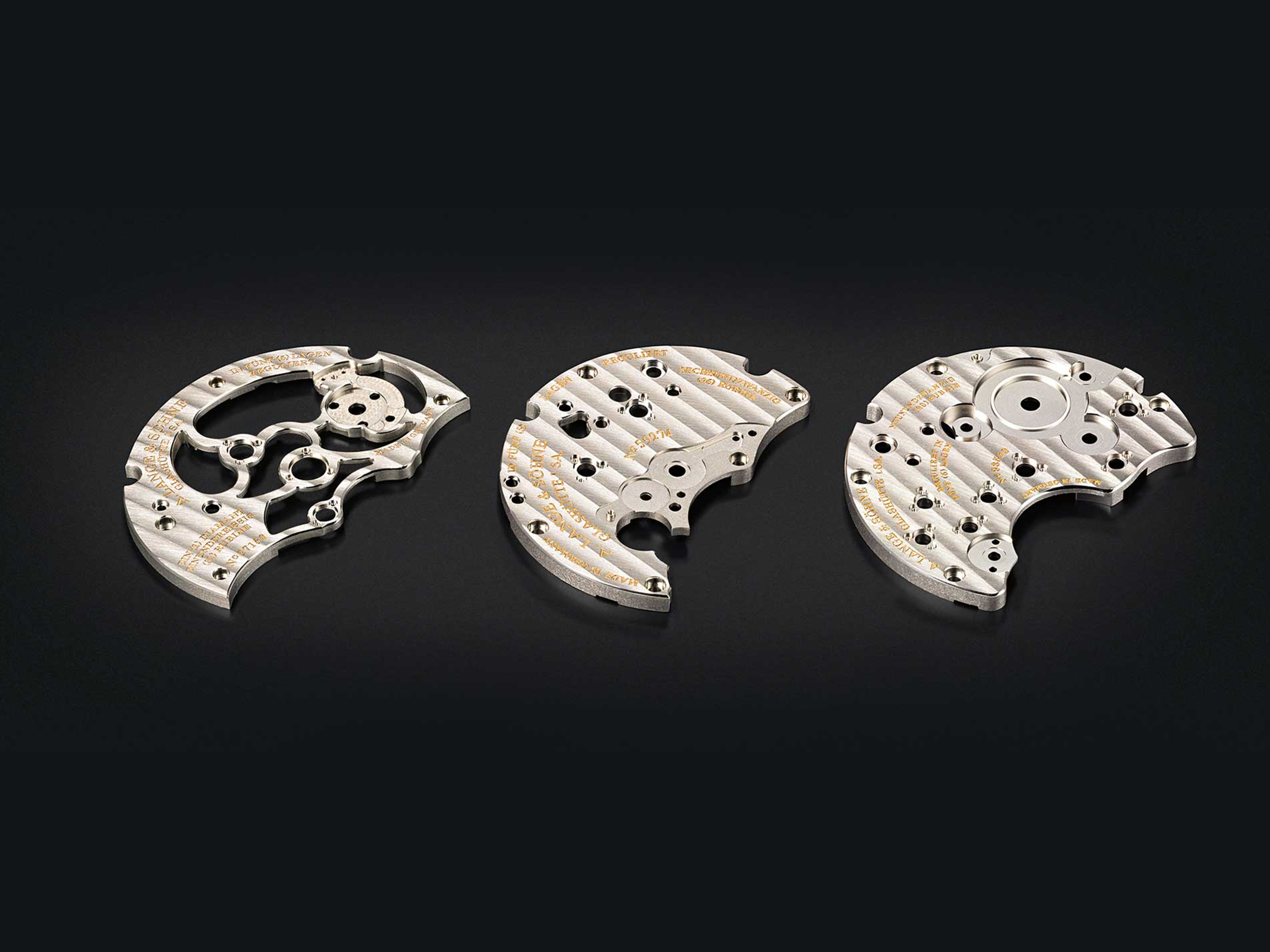
Every modern three-quarter plate is made from untreated German silver. It is finished by hand, aged by exposure, and reveals its character with time.
The brilliance of the three-quarter plate lies in its simplicity. It solves a mechanical problem with elegance and becomes, in the process, a visual signature. Even today, it serves as a quiet reminder of Lange’s original ambition: to build better watches by design.
2. Glashütte Ribbing, Not Geneva Stripes
The striping on Lange movements is not traditional Côtes de Genève. It is deeper, more textured, and slightly more irregular. This is what collectors often refer to as Glashütte ribbing. It is applied with a rotating abrasive wheel and requires considerable manual alignment to look consistent across the full plane of the plate.
It is not meant to be soft or ethereal. It is meant to be tactile. You can see this clearly when comparing a Lange three-quarter plate to the bridges of a Patek 240. The Lange movement feels more architectural, more physical, almost like the grooves of an LP record.
3. The Balance Cock: Lange’s Quiet Signature
Every A. Lange & Söhne timepiece is, in a subtle but meaningful way, unique. That is not marketing hyperbole—it is a matter of craft. On each watch that leaves the Glashütte manufacture, one component is individually engraved by hand: the balance cock.
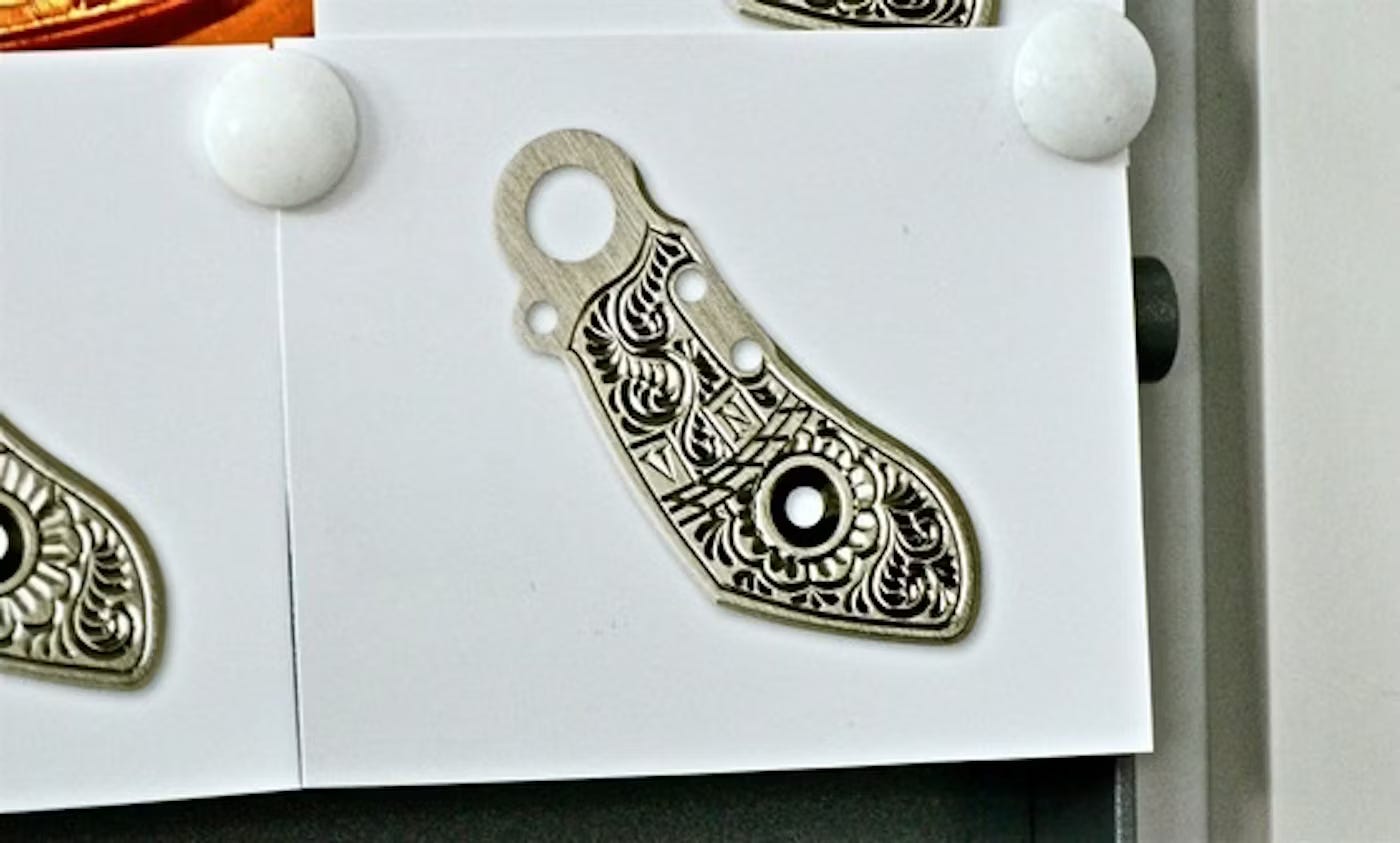
This tradition dates back to the early 20th century, when Lange was producing its highest-grade “1A” pocket watches. Engraving was both a mark of quality and a form of personal expression. When the brand was revived in the 1990s, it made perfect sense to bring this hallmark back- not as a nostalgic flourish, but as a declaration of continuity.
Today, within Lange’s workshops, a team of just six engravers is responsible for this work. Using a set of roughly 40 specialised burins- each one custom-shaped to cut specific curves- they carve a floral motif into the balance cock of every movement. The process is entirely manual. No templates. No automation. The engraver works directly on a sliver of German silver no larger than a fingernail, coaxing out line and depth through pressure and repetition.
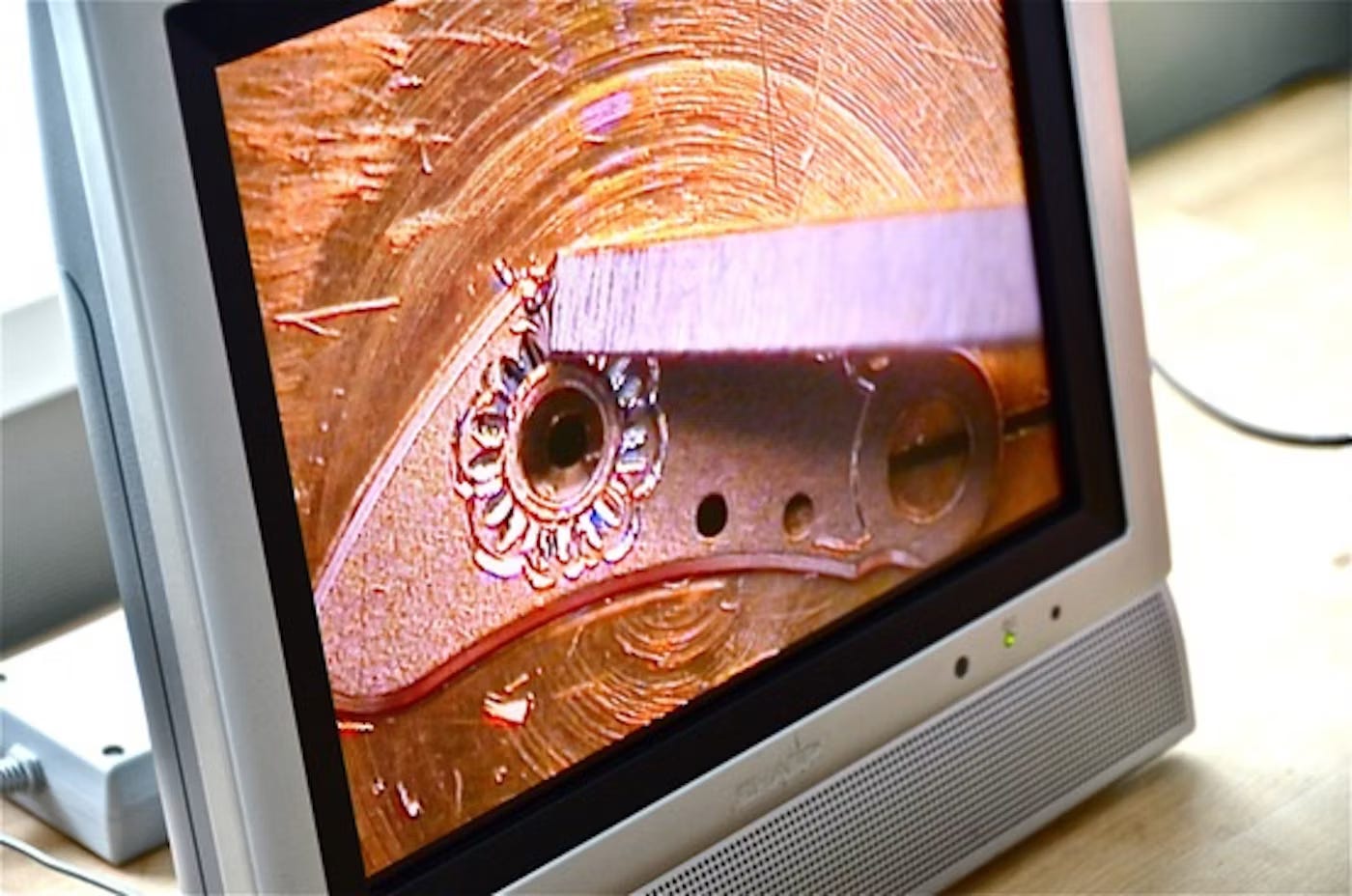
Although the general pattern is consistent across models, each engraving is unique. You can place two Lange 1s side by side and spot differences in the angle of a leaf, the thickness of a stem, the depth of shading. These aren’t imperfections- they are fingerprints. They are the watchmaker’s quiet signature.
For clients who want something more personal, Lange also offers custom balance cock engravings. These are typically reserved for highly complicated pieces- Tourbillons, Pour le Mérites, Handwerkskunst editions- and are limited to just five to ten commissions per month. A customer might request initials, a family crest, or a symbolic motif meaningful only to them. The work is slow, often taking between 50 and 90 hours, and is never rushed. Precision is the point.
Lange doesn’t advertise this service widely. It’s offered discreetly, to those who ask. But it underscores a deeper truth about the brand. For all the industrial discipline and technical rigor in its movements, there remains space for human expression- just enough to leave a mark.
And for those who make the trip to Glashütte, Lange offers something even rarer. You can meet the person who engraved your balance cock. It is a small moment, but one that lingers. In a world of mass production, the idea that someone sat at a bench and shaped a piece of your watch by hand is not just impressive. It is intimate.
4. Screw-Mounted Gold Chatons
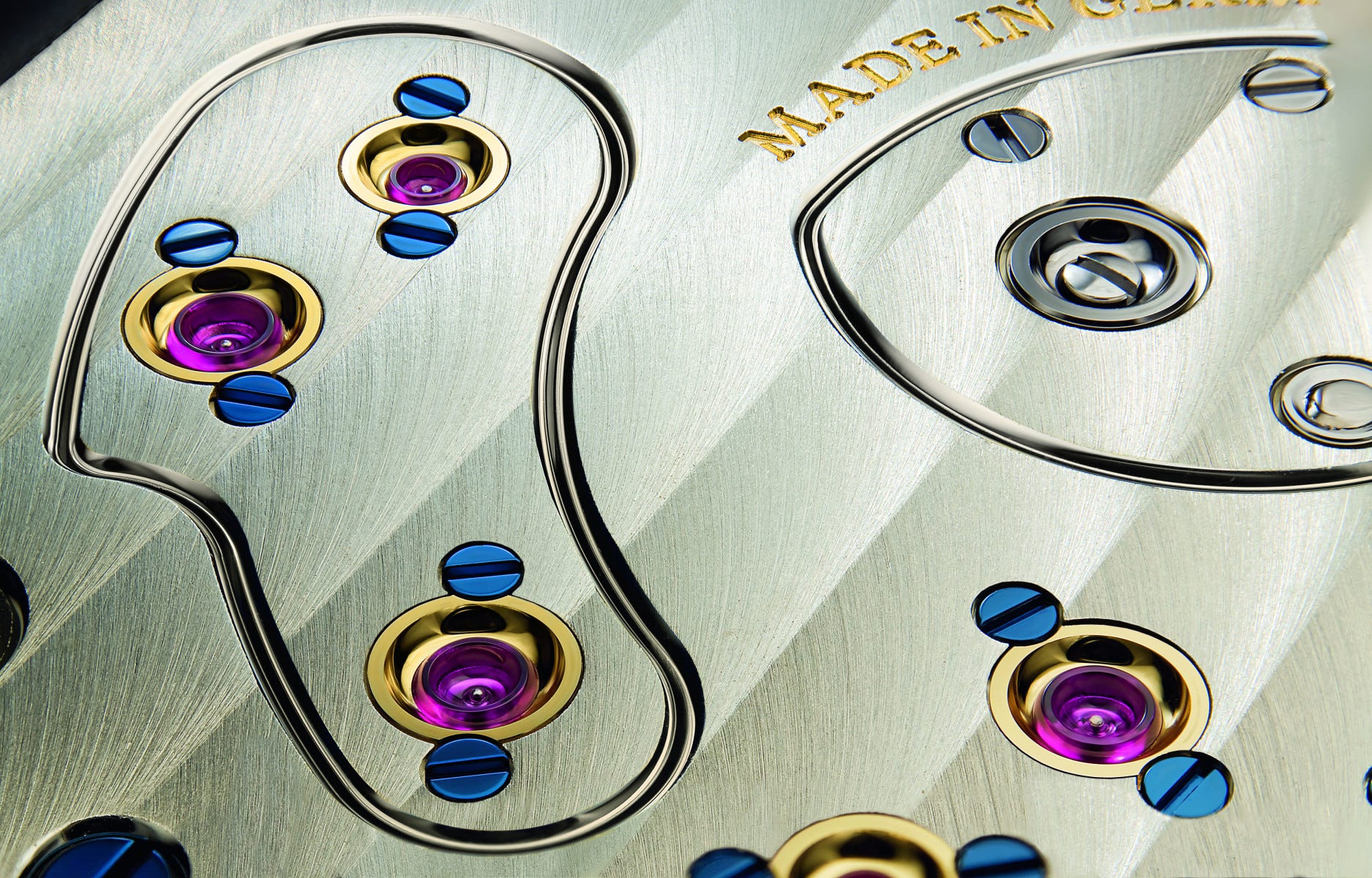
Borrowed again from 19th-century Saxon watchmaking, the gold chatons at Lange are not friction-fit, but mounted with thermally blued screws. They serve the same purpose as jewels in any movement, but they are louder. More three-dimensional. They disrupt the surface of the plate and make a statement.
While most Swiss movements hide their jewels in recessed sinks, Lange frames them. This is one of the clearest aesthetic declarations of Lange’s design language: it does not hide the mechanics. It exhibits them.
The First Era: 1994 to 2000 – Finishing as Philosophy
Lange is often viewed through the lens of two distinct eras: the pre-Richemont years and the period that followed the brand’s acquisition by the Richemont Group in 2000. That moment marked a turning point- not only in ownership, but in production scale, strategy, and visibility. Today, a growing number of collectors specifically seek out early, pre-Richemont pieces. The question that naturally follows is whether those watches differ meaningfully in quality- or whether the distinction is more about myth than mechanics.
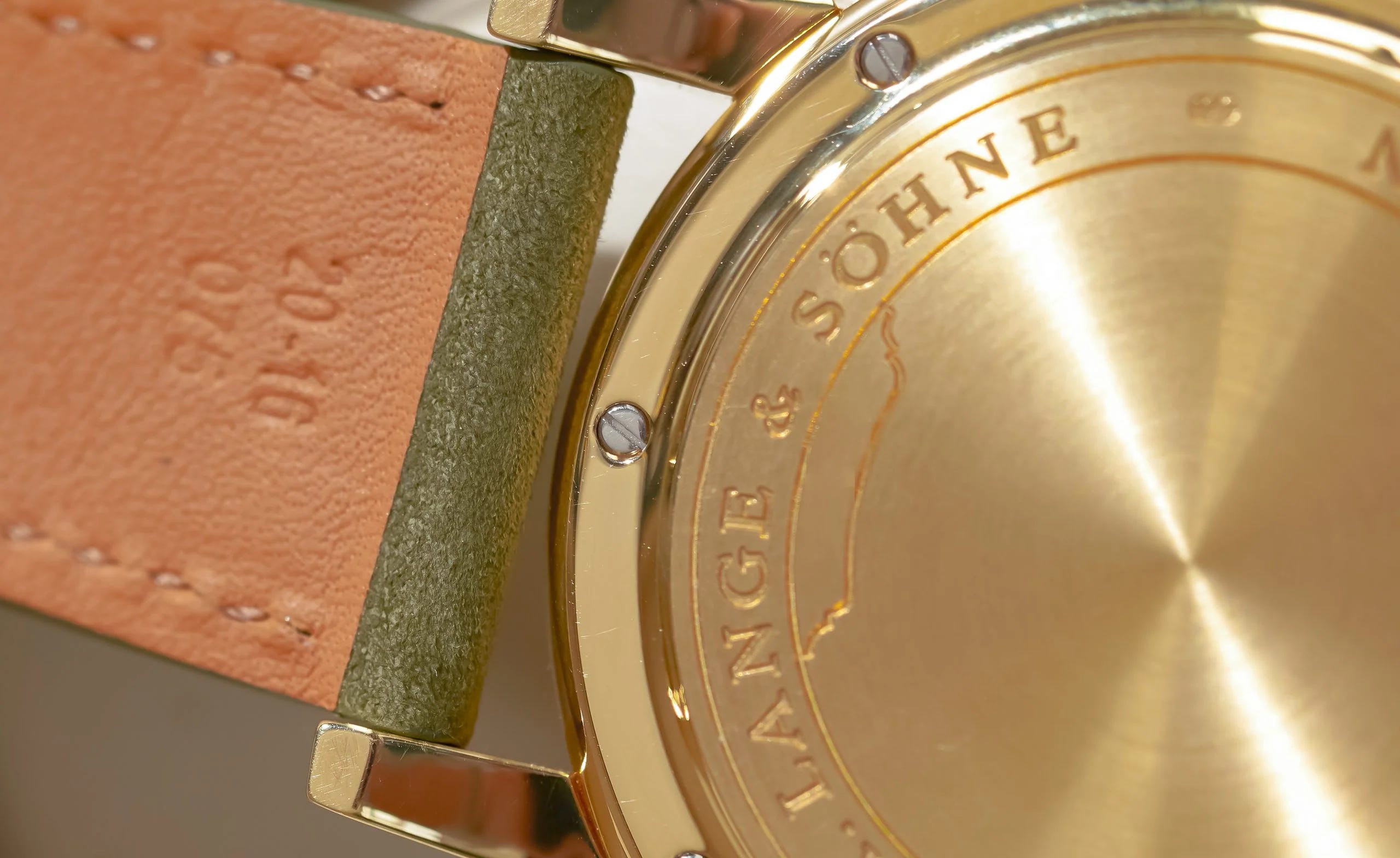
When A. Lange & Söhne was reestablished in 1994 under the leadership of Walter Lange and Günter Blümlein, it had no vintage catalogue to fall back on. Unlike Patek or Audemars, it was not returning to production, it was rebooting identity from scratch. And so it made finishing part of its brand language from the very beginning.
Collectors often speak reverently of the early Lange 1s, Datographs, and Saxonias from the late 1990s and early 2000s. These watches have a few subtle characteristics that set them apart.
First, the tone of the German silver plates was warmer. Whether this was due to metal composition, smaller-scale production, or less aggressive cleaning processes, early L901.0 movements have a richness that more recent examples seem to lack. They age like parchment. Even unworn examples carry a visual depth that collectors find hard to explain but easy to recognise.
Second, early anglage on bridges was slightly less uniform. It was still mirror-polished, but it had a hand-cut quality that made it feel less sterile. This is not to say that modern Lange finishing is worse. In fact, from a technical standpoint, current models are often more consistent. But the early years had a certain softness, a feeling of bench-made individuality that is harder to preserve at scale.
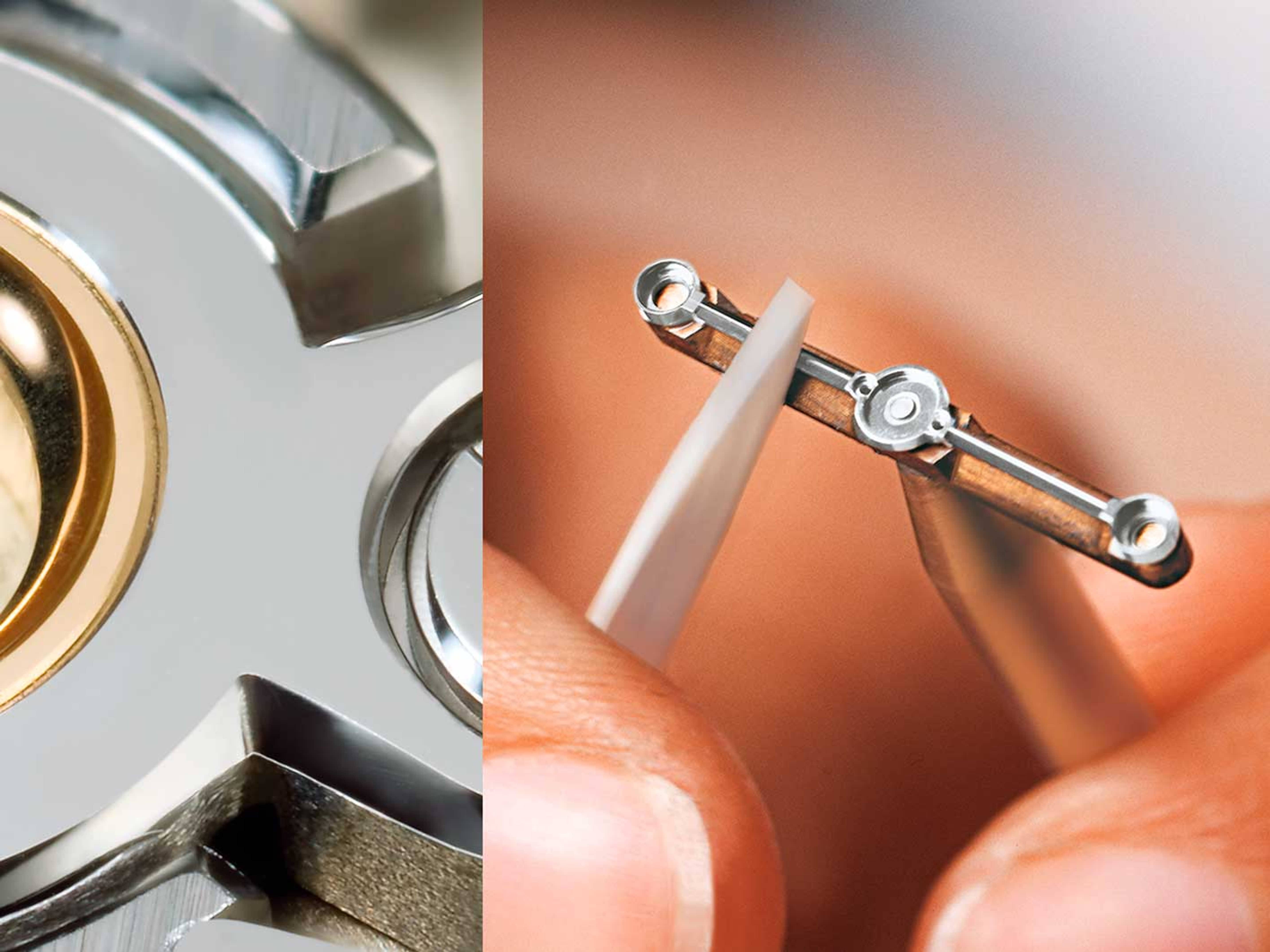
Third, the bridge shapes themselves were often more generous in their curves. The layout of the original L901.0, with its elegant winding wheels and overlapping bridges, was unashamedly complex. It was not concerned with servicing efficiency or simplification. It was a movement designed to be admired, not merely used.
In those years, finishing was not a layer applied at the end. It was embedded into the architecture from the start.
The Second Era: 2000 to 2018 – Expansion, Consistency, and the Rise of Product Families
As Lange matured and expanded, finishing became more systematised. New models were introduced in a more structured way: Grand Lange 1, Saxonia Annual Calendar, 1815 Up/Down, and the Richard Lange line. Each brought new movement layouts and production challenges.
Finishing remained exceptional, but it had to scale. The rise of CNC pre-shaping meant that anglage could be more uniform. Ribbing was still applied by hand, but with tighter tolerances. The German silver plates often looked cooler in tone, with more uniform grain. Even the engraving on the balance cocks became slightly more precise, although Lange has always insisted that each one is still done by hand.
In this period, collectors began to notice a shift. Some referred to it as the "industrialisation" of Lange finishing. That is probably too strong. The quality remained elite. But the small quirks and imperfections that gave early pieces their soul were smoothed out.
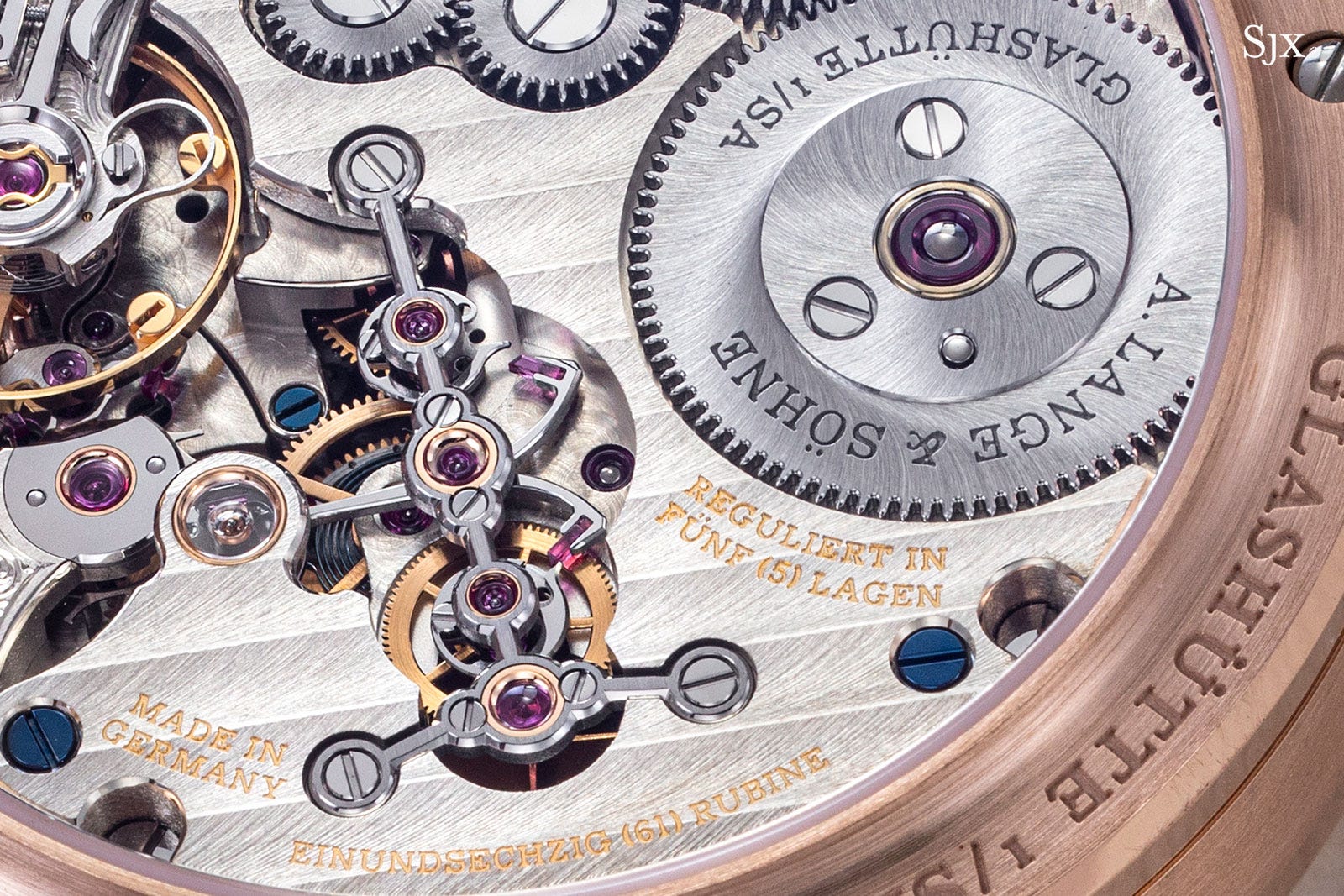
This was also when Lange began to engage more deliberately with the Swiss haute horlogerie world. The Double Split and Zeitwerk, both mechanical marvels, were released in this period. These watches brought new complications, but also new finishing expectations. The movement of the Zeitwerk, in particular, pushed Lange into new territory with sharp internal angles, extreme depth, and visual complexity that rivalled anything out of Geneva.
Finishing, during this period, became a tool for horological legitimacy. It was used to prove that Lange could stand with the very best.
The Modern Era: 2019 to Present – Divergence, Experimentation, and the Problem of Uniformity
Today, Lange faces a different challenge. The brand is widely recognised as one of the top three in high-end watchmaking. But it is also under pressure to evolve. Production has increased. The secondary market has become more vocal and more volatile. And collector expectations have shifted. No longer is it enough for a watch to be well-finished. It has to be interestingly finished. It has to surprise.
This is where some tension has crept in.
Take the Odysseus. Lange’s first steel sports watch is, mechanically, extremely competent. The movement is thoughtfully finished, with a beautifully hand-engraved balance bridge and brushed decoration on the bridges that echoes the case. But it left some Lange purists cold. Why? Because the visual language felt diluted. The calibre was based on an earlier Saxonia automatic reference, and removed the flat polished escape wheel cap and replacing the traditional balance cock with a balance bridge for the first time- perhaps this was an attempt to make the movement more robust in a sports watch.
Even the newer Saxonia references, especially in thin or simplified variants, have raised questions. The L093.1, while elegant and thin, has a very conservative layout. The finishing is clean, but to some eyes, it lacks the architectural drama of the early L941.1 or L901.0. There is nothing wrong, technically. But the question lingers—has Lange become too tidy?
At the same time, some of Lange’s more recent launches have taken finishing to a new level. The Richard Lange Jumping Seconds, with its deeply skeletonised bridges and triple-finished surfaces, is as ambitious as anything Lange has ever produced. So too is the Triple Split, which manages to balance visual clarity with mechanical absurdity. These watches are no less Lange than the early pieces. But they show how the brand is selectively choosing where to push finishing boundaries, and where to pull back.
There is also the issue of uniformity across price points. The Lange 1 Time Zone and the Saxonia Thin are finished to essentially the same visual standard. For collectors who stretch to afford an entry-level Lange, that is a generous and egalitarian approach. But for those spending six figures on a Tourbograph or Handwerkskunst edition, it raises questions. Should a £100,000 watch feel more luxurious than a £25,000 one?
In the video above, Mr Schmid discusses that all Lange watches are finished to the exact same level, from the grand complication to the Saxonia thin.
That is the quiet debate underneath modern Lange collecting. Not whether the finishing is good. It always is. But whether it is distinctive enough. Whether it is expressive enough. Whether it still tells a story.
A Collector’s Framework: How to Assess Lange Finishing in the Real World
Looking at finishing under a loupe is one thing. Assessing it in context is another. For collectors, the real value of finishing is not just in the execution, but in what it says about the maker. With Lange, that language is consistent, but nuanced. Here are five lenses I find useful when handling a piece:
1. Movement Architecture
How much of the movement is visible, and what choices were made in the layout? Early Lange calibres like the L901.0 are deliberately complex. Later ones like the L086.1 or L155.1 are more restrained. The difference is not necessarily a downgrade—it is about intent. Simpler movements can still be beautifully finished. But Lange’s best work often happens when the architecture gives room for deep layering.
2. Contrast in Surface Treatments
The interplay of brushed Glashütte ribbing, black polished components, chamfered edges, straight graining, pelage and solarisation is central to Lange’s aesthetic. The best examples create visual depth through finishing alone, without needing skeletonisation or exotic materials.
3. Transitions
This is where Lange often pulls ahead of the competition. Look at the inner corners of anglage. Look at how the striping fades into the base plate. Look at how a screw sinks perfectly into a gold chaton. These transitions are where a watch tells you if it was made to be admired or merely assembled.
4. Human Signatures
No Lange watch is entirely machine-made. You see the craft in the hand-engraved balance cock. You feel it in the slight asymmetry of the ribbing near the crown wheel. These are not flaws. They are fingerprints. They are evidence of authorship in a world of repetition.
5. Honesty of Finishing
Some brands decorate what cannot be seen to prove a point. Others leave it blank, hiding cost-cutting behind “restraint.” Lange does neither. What you see is what is meant to be seen. The finishing is not excessive, but it is intentional. That integrity matters.
Independent Brands and the New Finishing Arms Race
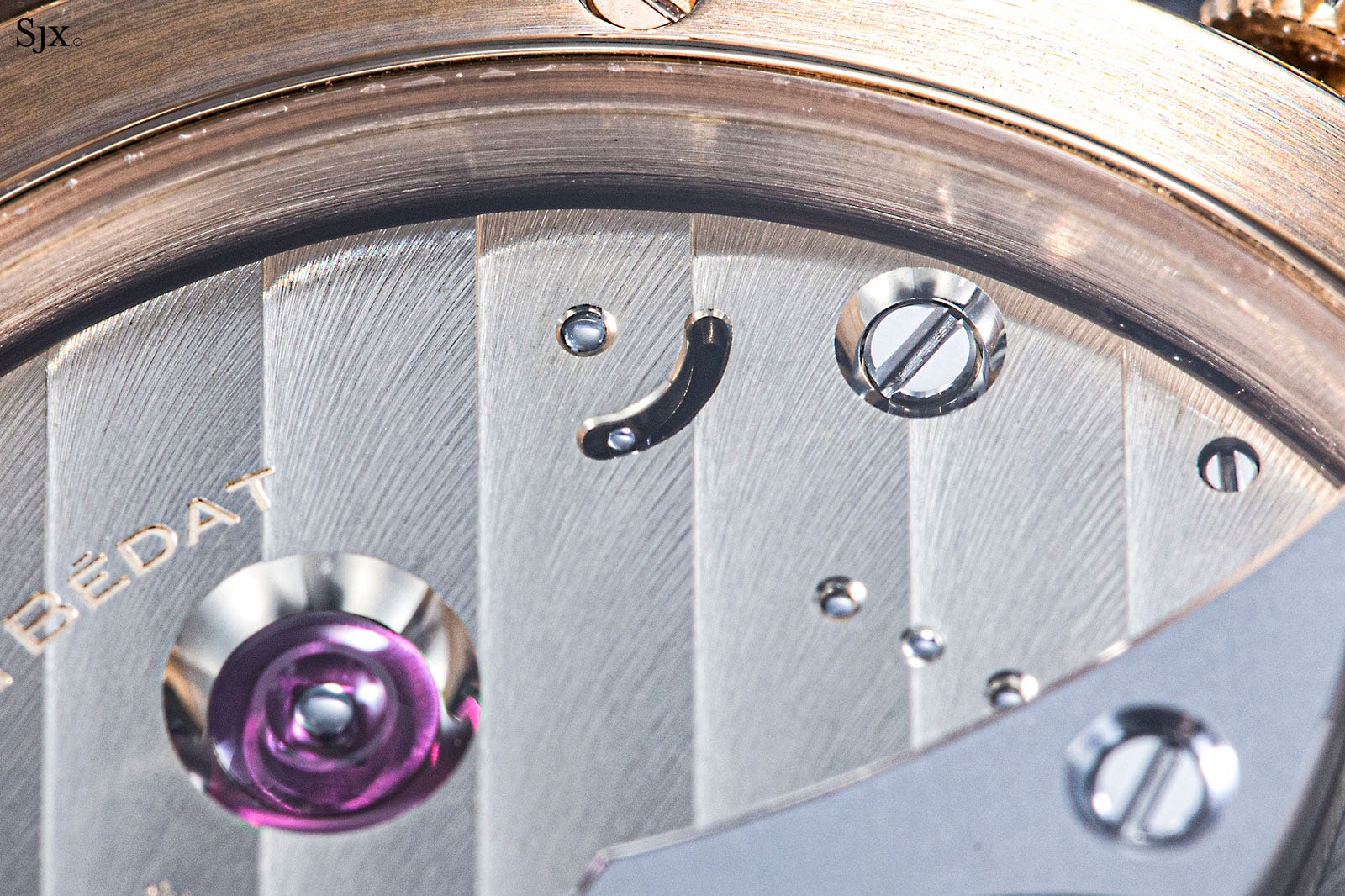
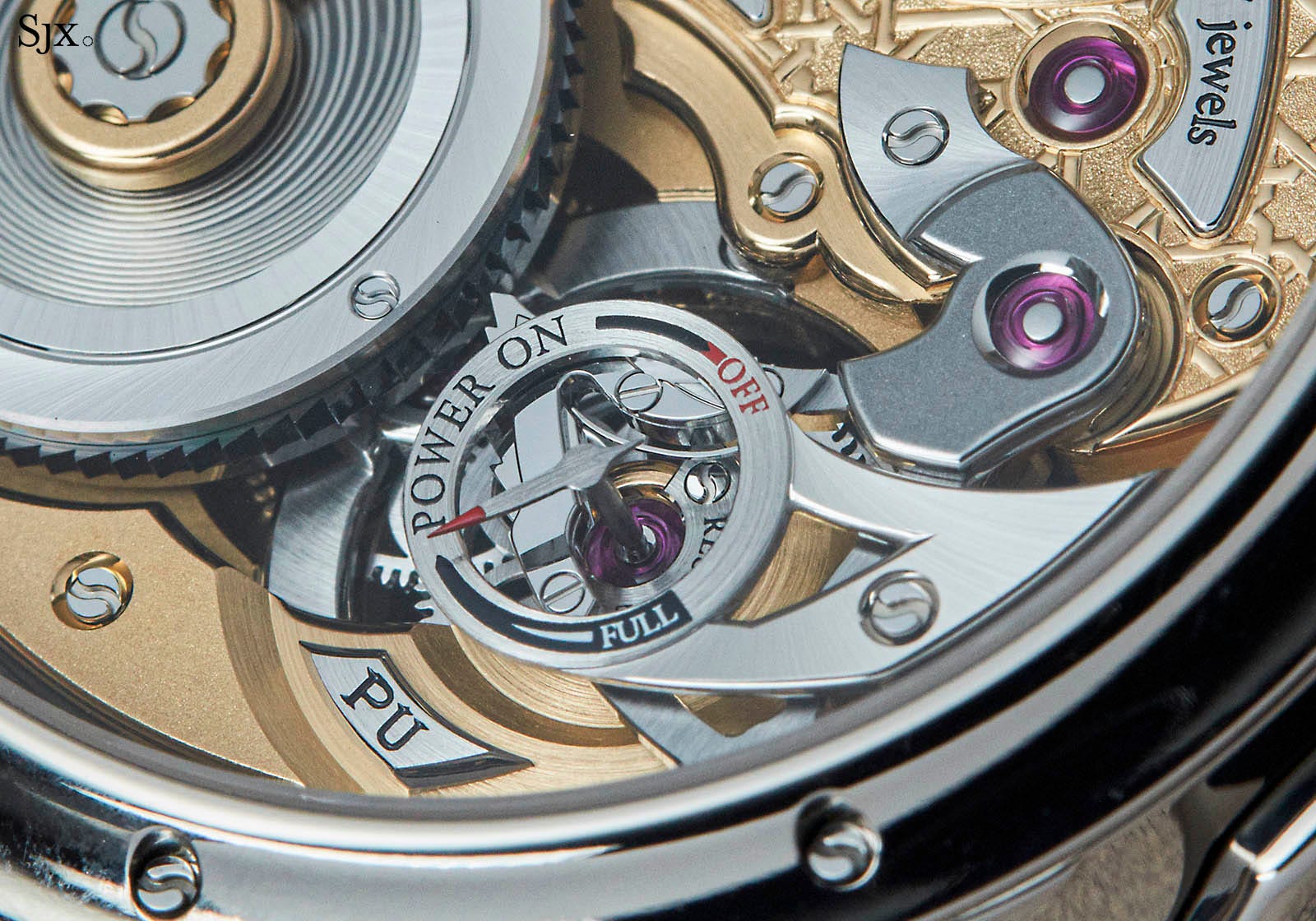
In the last five years, a number of independent watchmakers have raised the bar for what collectors expect in finishing. Names like Petermann Bédat, Romain Gauthier, and Naoya Hida have brought a new level of precision, warmth, and flair to traditional hand finishing. So how does Lange stack up?
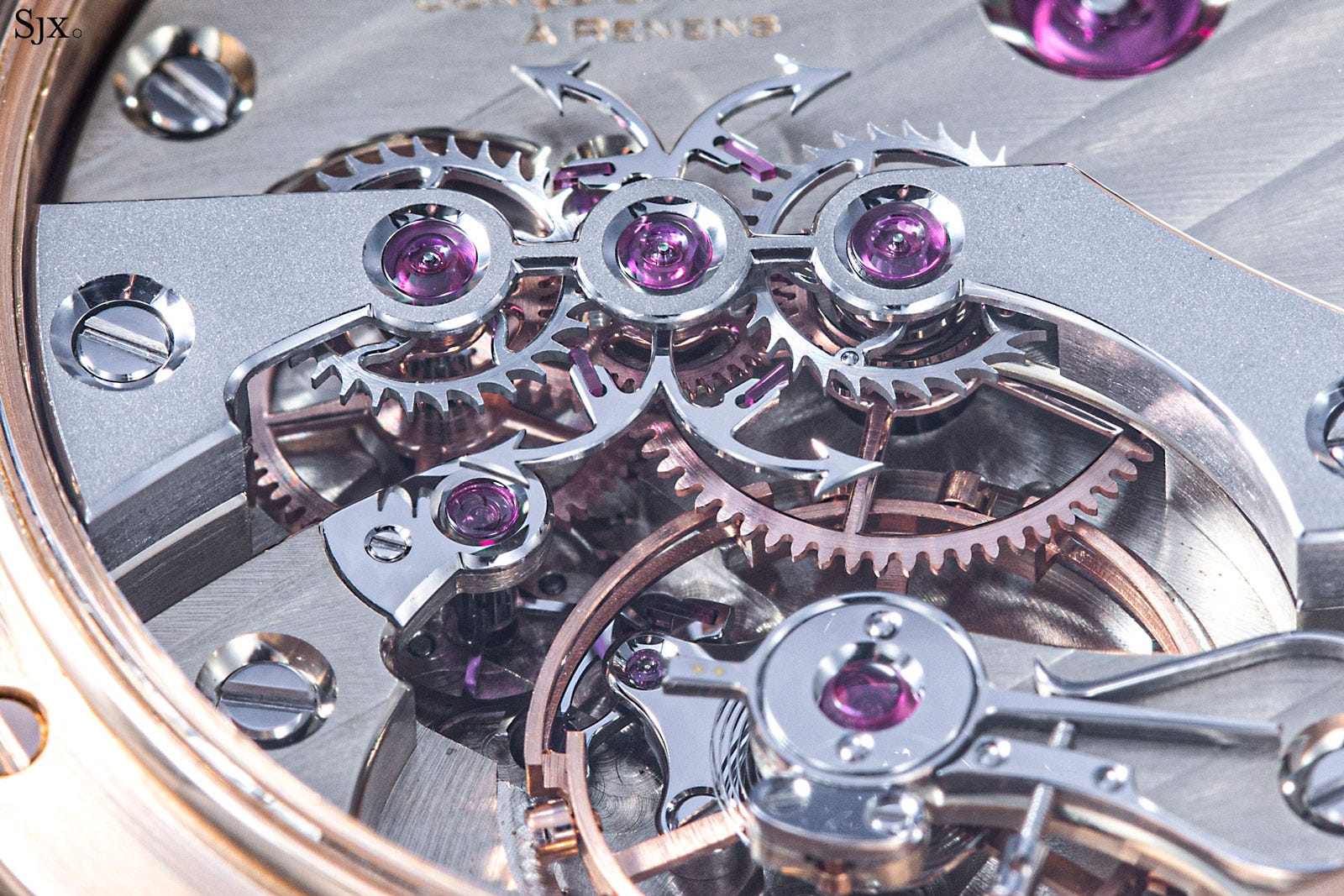
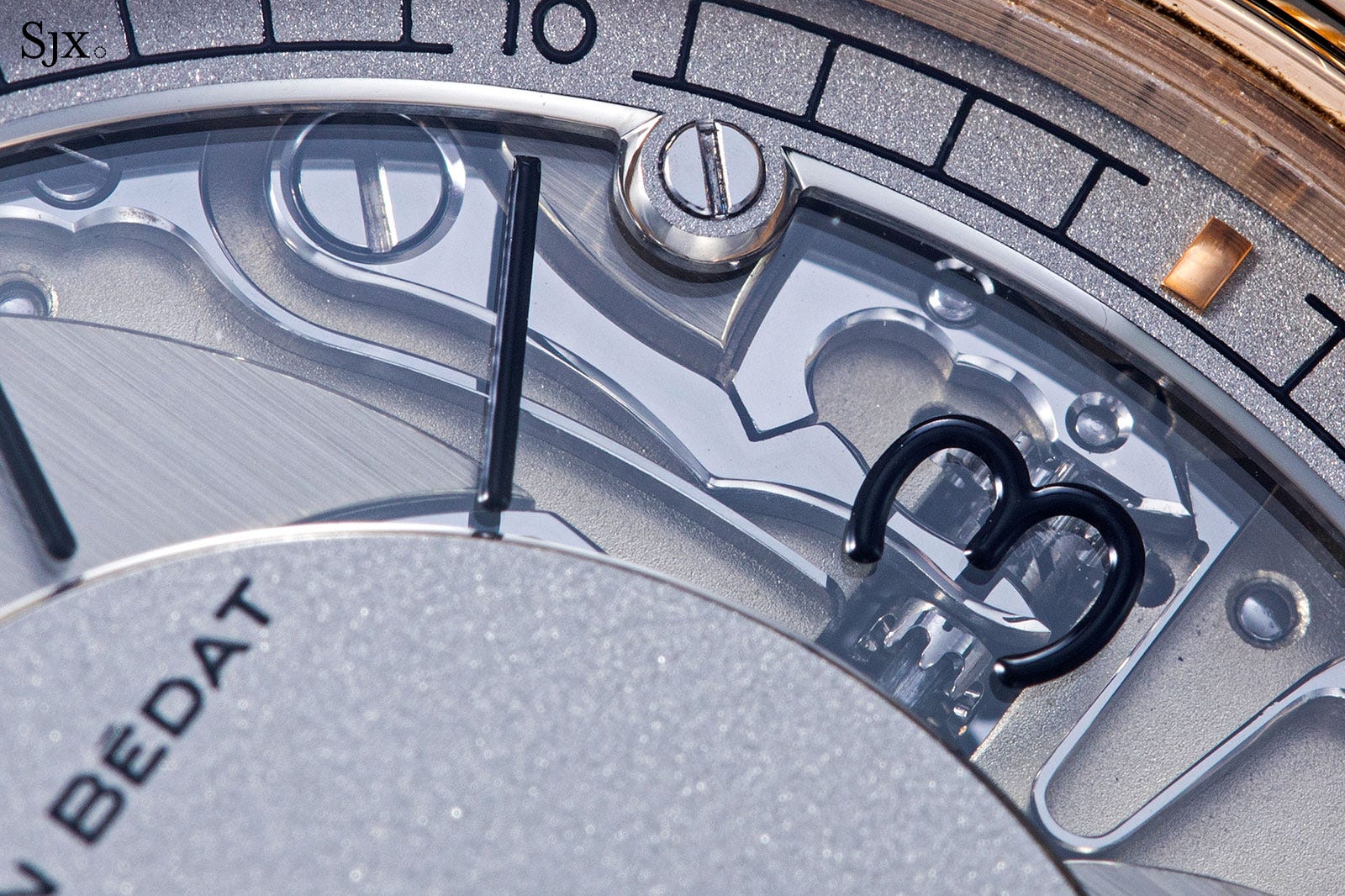
Petermann Bédat deliver some of the finest black polishing and internal angles in the industry, full stop. Their 1967 Deadbeat Seconds is a masterclass in detail. But it is also a 10-piece in each metal production, made with far more time per movement than Lange can afford. That is not a criticism. It is a scale issue.
Romain Gauthier focuses on deep, architectural movement design and exaggerated bevels, often done in a more flamboyant style. His Logical One has a very different aesthetic philosophy from Lange. It is expressive, almost theatrical. Lange is more reserved, but just as deliberate.
Naoya Hida takes a minimalistic approach. His dial-side finishing is his calling card. Movement finishing is excellent, though not at Lange’s level. But the real difference lies in philosophy. Hida is reviving Japanese Showa-era restraint. Lange is carrying forward German rationality.
The truth is, Lange does not need to beat independents at their own game. Its finishing is not about artisanal one-upmanship. It is about cohesion. It is about a very specific vision of what a movement should look like when designed, not just decorated.
Conclusion: Finishing as Identity
A Lange & Söhne has nothing to prove anymore. It does not need to shock you with black polished tourbillons or six-layer enamel dials. What it does need to do- what it has always done- is maintain a consistency of purpose.
Lange finishing is not showy. It is not seductive in the way a F.P. Journe movement is. It is not emotionally warm like Kari Voutilainen’s guilloché. It is cooler. More cerebral. More geometric. It is finishing that respects the machine, even when executed by hand.
And for some collectors, that is the whole point. When you stare at the caseback of a Lange, what you are seeing is not just craft. You are seeing values. Solidity. Transparency. Discipline. Quiet pride.
This is what happens when Germans do Geneva stripes. They do not copy them. They translate them. And in doing so, they tell a story no Swiss maison ever could.
really wonderful essay, well done!
integrity is exactly the word i’d use as well to describe their approach to finishing. it is as it should be, and it took me years of looking at movements to understand what that means.
I learned a lot from this article and will need to revisit it to fully absorb everything.
It’s interesting that you used Petermann-Bedat as an example of an independent brand with exceptional finishing. Since both founders previously worked at Lange before returning to Switzerland, perhaps they’ve managed to blend the best of both styles? Their use of German silver for the bridges and main plate is an example of that influence.